Researchers Discover Wooden Remains at Noah’s Ark Site, Claim Formation Is Man-Made
Researchers Discover Wooden Remains at Noah’s Ark Site
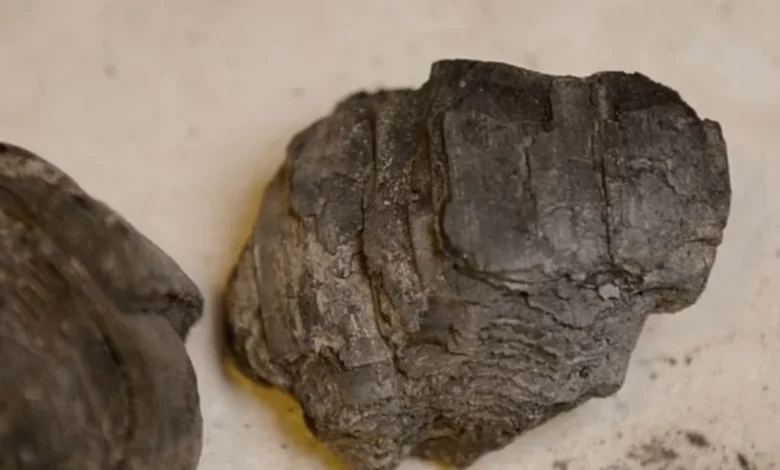
Researchers investigating a mysterious boat-shaped formation in Turkey believed by some to be linked to Noah’s Ark have uncovered pieces of charred wood buried about 30 feet beneath the surface.
The discovery at the Durupınar Formation, near Mount Ararat, has renewed interest in the centuries-old search for the biblical vessel, with investigators claiming their latest findings support the theory that the formation is man-made.
The first photographs of the wooden fragments have now been released, showing blackened and cracked pieces with visible grain patterns and markings that researchers believe could indicate human workmanship.
Archaeologist Dr. Cenker Atila told FOX News that at least one of the fragments appeared to have been shaped using ancient tools.
“One of the wooden pieces clearly shows signs of human workmanship. Its surface appears to have been slightly shaped and flattened using an axe or a knife,” Atila said.
He added that finding the fragments at such a considerable depth could indicate that they date back to an ancient period.
The samples have since been sent to four independent laboratories in different countries for further examination. Scientists will investigate their age, identify the type of wood, and determine their possible origins.
Andrew Jones, founder of Noah’s Ark Scans, which is involved in the investigation, said the tests would also look for traces of tree pitch, a waterproofing substance mentioned in the biblical account of Noah’s Ark.
“We’re testing this material to establish its age, identify the type of wood, and look for traces of tree pitch,” Jones said in a statement.
“After decades of searching, this could be a crucial piece of the puzzle.”
Researchers Make Bold Claim About Formation
The Durupınar Formation has attracted attention for decades because of its unusual boat-like outline and proximity to Mount Ararat, where the biblical account places Noah’s Ark after the great flood.
Located approximately 18 miles south of Mount Ararat, the formation measures roughly 515 feet long, a dimension researchers say closely matches their interpretation of the biblical vessel’s measurements.
According to their calculations, Noah’s Ark would have measured approximately 515 feet long, 86 feet wide and 52 feet tall.
The latest discovery of wooden fragments follows years of investigations involving ground-penetrating radar and underground surveys.
Radar surveys on Noah’s Ark formation
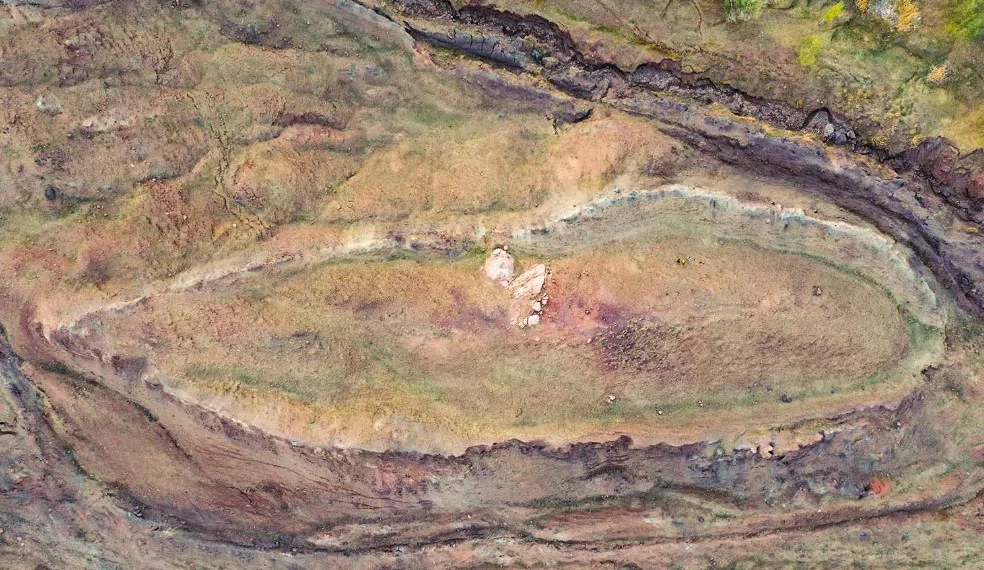
In 2019, researchers conducted a radar survey that detected straight lines and angular patterns beneath the formation. The team interpreted the readings as possible walls, passageways, and compartments.
This year, US defense scientist Dr. Khosrow Bakhtar examined the site using a more powerful radar system developed by the US Air Force.
The team reported detecting large underground boundaries and spaces that they believe could represent sediment-filled chambers, corridors, and tunnels.
Five prominent features appeared to form a possible tunnel system stretching approximately 151 feet, with an average height of more than 14 feet.
Researchers also identified a thick underground layer that appeared to consist of three distinct sublayers.
Atila said the finding reminded the team of the biblical description of Noah’s Ark, which is traditionally understood to have had three levels.
“In our holy books, Noah’s Ark had three levels; in our radar studies, we also identified a formation with three levels,” he said.
Bakhtar described the findings as the most significant discovery of his 45-year career.
“This is the most significant finding of 45 years of my career. It’s not geologic-related, because we masked all the geologic features,” he said in a late October press release.
The investigation team claims it has “100 percent confirmed” that the formation is a man-made object rather than a natural geological feature.
However, the claim has not yet been independently established.
Scientists Yet to Confirm Formation Is Noah’s Ark
Jones, who has investigated the area for nearly 30 years, has previously challenged explanations suggesting that the formation is simply a natural geological structure.
He told the Daily Mail that neither radar surveys nor drilling inside the formation had detected limestone or solid bedrock.
“This destroys the theory that the site is a solid limestone block shaped into a boat by glaciers and weathering after coming down the mountainside, and it also refutes the theory that this is bedrock around which mud flowed to form the shape,” he said.
Nevertheless, ruling out particular geological explanations would not automatically prove that the structure was built by humans or that it is Noah’s Ark.
Radar scans do not provide direct photographs of underground rooms or passageways. Instead, they detect changes in underground materials and boundaries, which require further investigation to establish their nature.
The researchers are now using the radar findings to identify promising locations for additional drilling.
Although the discovery of the wooden fragments has added a new dimension to the investigation, the samples must undergo laboratory testing before their age and origins can be established.
Jones has also acknowledged that the findings have not definitively identified the Durupınar Formation as the biblical vessel.
Previous Noah’s Ark Investigation Faced Controversy
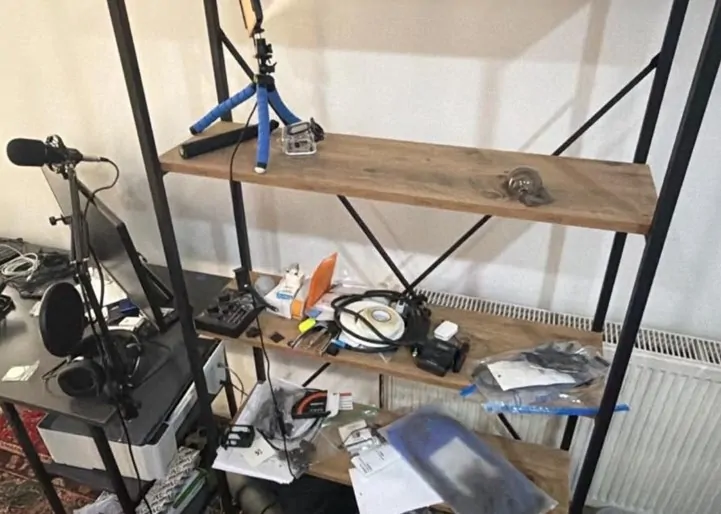
The latest discovery comes weeks after American researcher Andrew Jones, who is involved in the Durupınar investigation, revealed that his apartment in Turkey had been burglarized while he was away.
Jones disclosed on September 27, 2026, that electronic devices had been stolen from his apartment following an earlier incident in which he was allegedly harassed late at night.
He, however, reassured followers that the research would continue, explaining that the investigation data had already been backed up before the burglary.
The incident came amid renewed interest in the team’s findings, including claims that underground radar scans had revealed possible chambers, passageways, and other structures beneath the boat-shaped formation.
The investigation also attracted attention after researchers revisited a 1587 world map by Italian cartographer Urbano Monte, which features an illustration of Noah’s Ark in the mountains of Ararat.
Some researchers have suggested that the illustration bears similarities to the Durupınar Formation in both location and apparent dimensions, although the connection has not been established.




There are no comments yet. Why don't you write one?