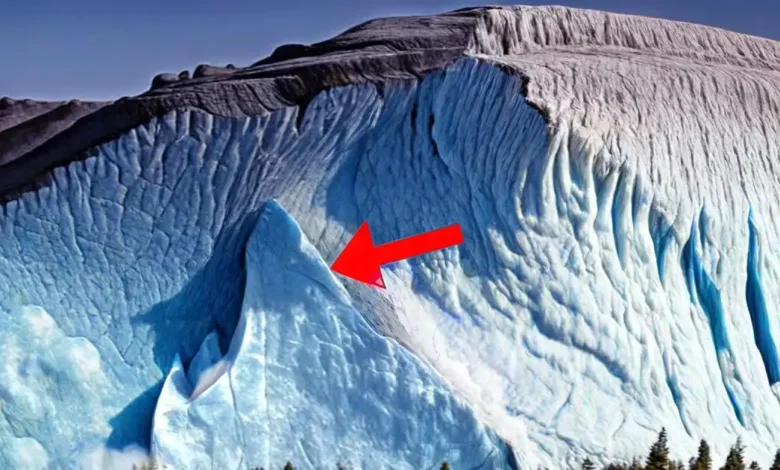
Doomsday Glacier collapse could drown major cities, scientists warn
New research on Antarctica's Thwaites Glacier shows it may be melting faster than expected, threatening global sea level rise and coastal cities like New York, London, and Bangkok.

The Thwaites Glacier in West Antarctica is rapidly destabilizing, and scientists warn its collapse could raise sea levels by up to 10 feet — enough to submerge major global cities. A network of hidden lakes beneath the glacier is accelerating its retreat, prompting urgent concern among researchers.
Nicknamed the “Doomsday Glacier,” Thwaites is one of the largest and most vulnerable glaciers in Antarctica. It already holds enough ice to raise global sea levels by more than two feet. But if it collapses entirely, it could destabilize surrounding ice sheets and trigger far more dramatic changes — with sea levels potentially rising up to 10 feet.
That kind of increase would flood cities like New York, London, and Bangkok — all densely populated, low-lying urban centers — disrupting economies and displacing millions.
Hidden lakes are speeding up the melt
The latest research from the International Thwaites Glacier Collaboration (ITGC), a global research initiative launched in 2018, is painting a worrying picture. In March 2025, a team led by Professor Noel Gourmelen discovered a system of “hidden lakes” beneath the glacier. These subglacial lakes are draining rapidly, sending huge volumes of freshwater into the ocean and weakening the glacier’s base.
Have you heard about the Thwaites Glacier, aka the Doomsday Glacier?
It’s melting rapidly, and scientists are warning that its collapse could mean global flooding and disaster.
Here’s what’s happening and how supply chains can adapt: pic.twitter.com/LR3iD7kbxn
— Glenn Koepke (@LogTech1999) December 23, 2024
“We expected water would influence the melting process,” Gourmelen said, “but the scale of the lake drainage caught us off guard. It gave us a unique chance to see how much it impacts the glacier’s retreat — and it’s significant.”
This surge in melting — described as a “turbo-charged” retreat — is happening alongside record-breaking temperatures across the Southern Hemisphere this year, compounding scientists’ concerns.
Could it collapse soon?
The idea of Thwaites collapsing has long felt like a distant threat. But Dr. Alastair Graham, a marine geologist at the University of South Florida, says 2025 has shifted that timeline.
“This year is really different,” he said. “It’s very difficult to recover from this in one season. The game has changed.”
Although a full collapse might still be decades or centuries away, the latest findings suggest the glacier may be more unstable than previously believed — and the tipping point could arrive much sooner than expected.
If the Thwaites Glacier breaks apart, the world’s coastlines would be forever changed. The consequences go far beyond flooding — with wide-reaching effects on global trade, supply chains, and human migration.
Researchers continue to monitor Thwaites closely, but the message is clear: the planet is warming fast, and the ice is responding.