From near-death survivor to screen legend
After surviving childhood trauma and early career challenges, the iconic actress continues to inspire new generations through resilience and reinvention.

At just 12 years old, Winona Ryder nearly lost her life. She had no pulse after being pulled from the ocean following a terrifying accident. It was a moment that would shape her identity — and her future.
The near-drowning incident not only left her with lifelong aquaphobia but also marked the beginning of a life defined by survival, whether from water, public scrutiny, or personal pain. Today, Ryder is recognized not only for her body of work but for the quiet resilience behind it.
Born in Winona County, Minnesota, in 1971, Winona Ryder (née Horowitz) was raised by literary parents in a farmhouse in Northern California. Her father was an author and rare books dealer, while her mother worked as a writer and video producer.
Though her early environment encouraged creativity, Ryder’s childhood was far from carefree. Her family’s history weighed heavily on her. In interviews, she has spoken openly about the emotional impact of learning that relatives on her father’s side died in Nazi concentration camps, and that her maternal grandfather lost his life fighting the Nazis during World War II.
“I was terrified of being separated from my parents,” Ryder told The Mirror in 2020, recalling nights she slept by their door. She turned to books for understanding, often studying Holocaust history in libraries in search of connection and clarity.
Bullying, identity, and early rejection
Ryder’s challenges extended beyond family history. As a teenager, she faced relentless bullying. In one incident, three boys at her new school mistook her for a “gay boy” because of her short hair and clothing. The attack left her with serious injuries, including a head wound requiring stitches and a fractured rib.
Despite her success in early roles like Beetlejuice (1988), Ryder was not embraced by her peers. She has recounted how classmates continued to ridicule her, calling her a “witch” even after she appeared in a major film.
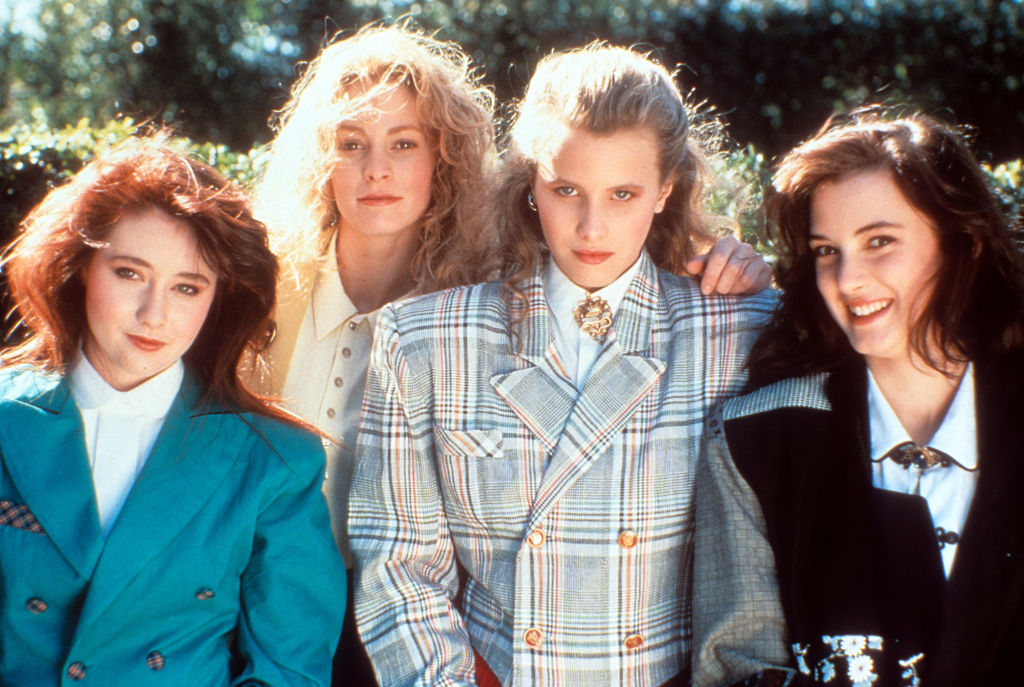
The rejection didn’t stop at school. When she auditioned for the 1989 dark comedy Heathers, producers initially dismissed her for not being “pretty enough.” Determined, Ryder returned with a makeover and offered to work for free — simply to read the part. She got the role, which became a cult classic and helped shape her on-screen persona: smart, sharp, and deeply relatable.
A defining face of ’90s Hollywood
From the late 1980s through the 1990s, Ryder became one of the most sought-after actresses of her generation. Her performances in Heathers, Edward Scissorhands, Reality Bites, and Little Women earned critical acclaim and commercial success. She received two Academy Award nominations — for The Age of Innocence (1993) and Little Women (1994) — by the time she was 23.
Her personal life also drew media attention, particularly her relationship with actor Johnny Depp, whom she met in 1989. The couple’s engagement and shared screen time in Edward Scissorhands turned them into a tabloid fixture. Depp famously tattooed “Winona Forever” on his arm, later altering it to “Wino Forever” after their breakup in 1993.
Struggles behind the spotlight
Despite her success, Ryder faced significant emotional and mental health challenges. Her fear of water, stemming from her near-drowning at 12, resurfaced while filming underwater scenes in the 1997 sci-fi film Alien: Resurrection. “That tank stuff was some of the hardest stuff I’ve ever had to do,” she told journalist Bobbie Wygant.
In addition to anxiety and aquaphobia, Ryder dealt with depression. She has spoken about feeling isolated even at the height of her fame. “I saw myself on the cover of Rolling Stone magazine, and it said something like ‘Winona Ryder: the luckiest girl in the world,’” she said in a 1999 interview. “And it broke my heart because there I was, in so much pain.”
In 2001, Ryder took a break from acting following a highly publicized shoplifting arrest in Beverly Hills. The event sparked headlines, but also marked the beginning of a deeper withdrawal from Hollywood. She stayed out of the public eye for several years, quietly reassessing her career and personal life.
Returning on her own terms
Ryder reemerged in 2016 with a leading role in Netflix’s Stranger Things, playing Joyce Byers, a mother determined to find her missing son. The role introduced her to a new audience and reminded longtime fans of her emotional depth as an actress.
Critics praised her performance, and fans celebrated her return. Social media buzzed with appreciation, with many calling her casting one of the best decisions in the show’s development.
Since then, Ryder has continued to act selectively, prioritizing roles that resonate with her personally. She remains vocal about mental health and the pressures of fame, particularly for young performers.
“I feel incredibly lucky to have been able to live this life,” she told Harper’s Bazaar in 2024. “However intense and overwhelming it got, it’s nothing compared to what it is now with the internet and social media.”
Winona Ryder’s story defies the typical Hollywood narrative. Her success didn’t come from being the most glamorous or the most conventional star. Instead, she became a symbol of sensitivity, authenticity, and quiet strength.
From her early trauma and rejection to her triumphant return, Ryder’s journey continues to resonate with audiences who see their own struggles reflected in hers.
At 54, she remains a cultural icon — not just for the films she’s made, but for the battles she’s faced and the honesty with which she shares them.
Winona Ryder didn’t just survive the industry. She helped change it — by staying true to herself.