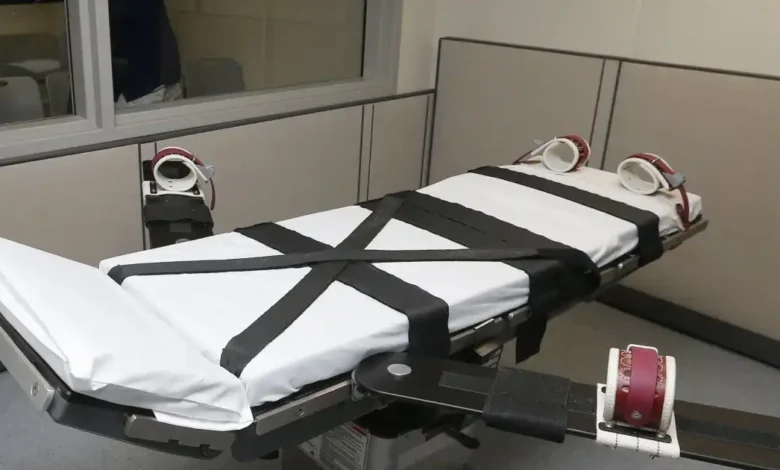
Inmate cries out during Tennessee execution after defibrillator dispute
Lawyers argued the prisoner’s implanted heart device caused unnecessary suffering, but the state refused to deactivate it

Byron Black, convicted of killing his girlfriend and her two daughters in 1988, was executed in Tennessee after nearly four decades on death row. During the lethal injection, he cried out in pain as his lawyers claimed his defibrillator worsened his suffering.
In 1988, Byron Black was convicted of killing his 29-year-old girlfriend, Angela Clay, and her daughters, 9-year-old Latoya and 6-year-old Lakeisha, in what prosecutors described as an act of jealous rage.
Angela’s family told police at the time that Black had threatened her when she considered ending the relationship. He was already serving a sentence for shooting Angela’s estranged husband, Bennie Clay, when the murders happened.
Investigators later revealed that both children were attacked while they slept, and that Lakeisha attempted to escape before being fatally shot.
“My kids, they were babies,” Bennie Clay said. “They were smart, they were gonna be something. They never got the chance.”
What happened during the execution?
On the day of his execution, Black, who suffered from dementia, kidney failure, and congestive heart failure, was strapped to a gurney. When the lethal drugs were administered, witnesses reported that he lifted his head several times and groaned in pain.
“Oh, it’s hurting so bad,” he said, as a spiritual advisor sat beside him praying.
Black’s attorneys had asked the state to deactivate his defibrillator, a device that shocks the heart when it detects an irregular rhythm. They argued that leaving it on could cause repeated jolts during the execution, amounting to cruel and unusual punishment under the Eighth Amendment.
A trial judge initially sided with the defense, but the Tennessee Supreme Court overturned that decision. Governor Bill Lee also declined to intervene.
His lawyer, Kelley Henry, said afterward: “I interpret that my client was tortured today.”
For Angela’s sister, Linette Bell, the execution brought a measure of relief.
“I thank God for making this happen,” she said. “His family is going through the same thing now that we went through 37 years ago. I can’t say I’m sorry because we never got an apology.”
Her brother-in-law, Bennie Clay, took a different view, saying he forgave Black before his death: “God has a plan for everything. He had a plan when he took my girls. He needed them more than I did, I guess.”
Many people online voiced support for the decision not to deactivate the defibrillator, with some arguing that Black’s pain reflected what his victims endured.
“Finally felt just a little of what he put others through,” one comment read. Another added, “Did he care how his victims felt?”
Byron Black became the second person executed in Tennessee this year and the 28th nationwide. His case continues to fuel debate about the death penalty, prisoner rights, and whether suffering during an execution can ever be justified.