Inside the Maldives Cave Diving Disaster That Claimed Six Lives

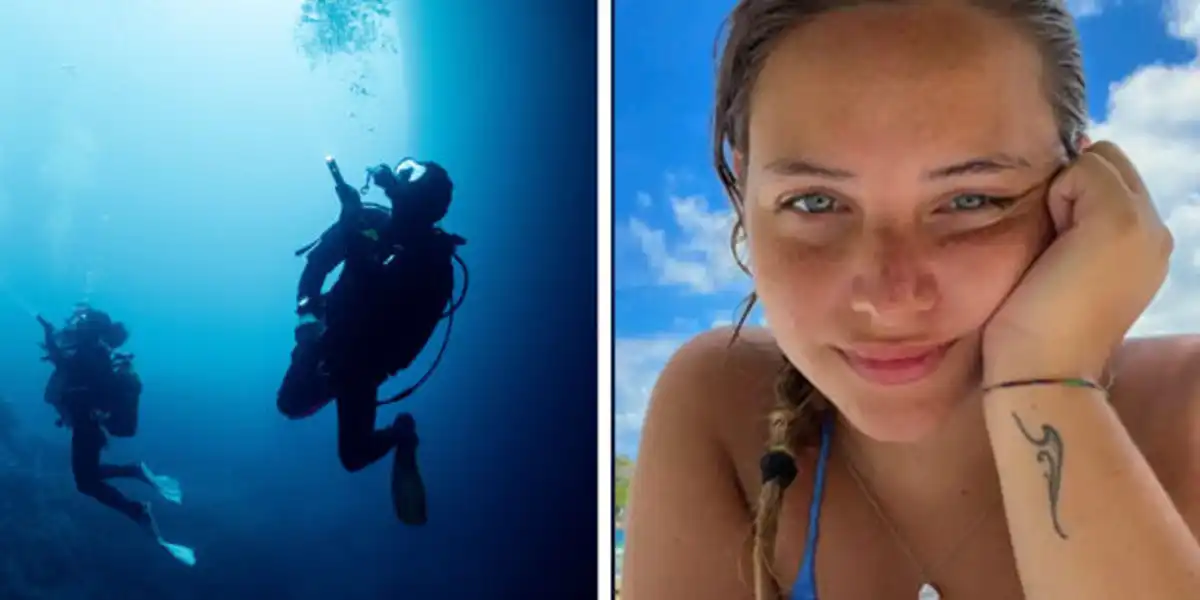
A single, pocket-sized camera now holds the key to solving a devastating underwater mystery in the Indian Ocean. Five Italian tourists ventured into the shadows of a submerged cave system in the Maldives’ Vaavu Atoll. None of them made it back to the surface.
The tragedy deepened when Staff Sergeant Mohamed Mahudhee, a rescue diver with the Maldives National Defense Force, perished from severe decompression sickness during the frantic recovery mission. The incident has stunned the global diving community, turning a routine scientific holiday into the deadliest diving disaster in Maldivian history.
Lost to the Deep
The group was anchored by Monica Montefalcone, 51, an associate professor of ecology at the University of Genoa and an internationally celebrated expert on Mediterranean seagrass ecosystems. Montefalcone was no amateur. She was a highly disciplined researcher with roughly 5,000 dives under her belt and had even survived the catastrophic 2004 Boxing Day tsunami while diving off Kenya.
She perished alongside her 23-year-old daughter, Giorgia Sommacal, a biomedical engineering student. The other victims were closely tied to Montefalcone’s academic world: research fellow Muriel Oddenino, recent marine biology graduate Federico Gualtieri, and Gianluca Benedetti, an experienced diving instructor who managed the vessel’s operations.
While Montefalcone and Oddenino were in the Maldives on an official scientific mission to study climate change impacts, the university confirmed that this specific cave excursion was undertaken privately. The sudden loss has left the European scientific community reeling.
“The University of Genoa expresses its deep sorrow for the sudden and tragic death… The sympathy of the entire university community goes out to the families, colleagues, and students who shared their human and professional journey.”
The Search for the Missing Lens
Monica’s husband, Carlo Sommacal, believes a missing piece of equipment could unravel the mystery of their final moments. He noted that his wife routinely filmed her underwater excursions to document marine habitats.
If recovery teams can locate her missing GoPro, the footage could pinpoint exactly what triggered the catastrophic failure deep inside the cavern. “Something must have happened,” Sommacal told Italian media, defending his wife’s meticulous nature and ruling out reckless behavior.
The physical layout of the disaster site explains why escape proved impossible. The team descended to between 50 and 60 meters (164 to 196 feet)—well past the Maldives’ strict 30-meter legal limit for recreational diving.
At that extreme depth, the divers entered a massive cave network divided into three large chambers connected by suffocatingly narrow passages. Renowned cave diving expert John Volanthen told CNN that the sheer depth and structural complexity of the system make the environment unforgiving.
Finely deposited silt on a cave floor can instantly cloud the water if disturbed by a single misplaced fin kick, reducing visibility to absolute zero. If the group lost track of their physical guideline, escaping the pitch-black labyrinth before their air supply evaporated would have been mathematically impossible.
International Experts Call in the Extraction
Finding the victims required elite global intervention. Three specialized Finnish cave diving experts, deployed by the Divers Alert Network Europe, arrived to navigate the deep, overhead environments.
Supported by local military forces and specialist equipment flown in from the United Kingdom and Australia, the team finally located the remaining four bodies. They were discovered grouped closely together in the third, largest, and deepest chamber of the cave system, while Benedetti’s body had been recovered earlier near the cavern’s mouth.
The loss of Staff Sergeant Mahudhee has added a layer of profound national grief to the international crisis. Maldives President Mohamed Muizzu addressed the nation to express the deep sorrow felt across the archipelago.
“The death of a diver of the Maldives National Defense Force while diving in search of missing tourists is a matter of deep sorrow for me and for every Maldivian citizen. This is heartbreaking news.”
As specialized teams plan the grueling multi-day extraction of the remains, Maldivian authorities have indefinitely suspended the operating license of the 36-meter luxury liveaboard yacht, the Duke of York, which hosted the divers. Criminal and maritime investigations are now underway to determine exactly how a team of elite scientists bypassed standard safety parameters, leaving a grieving family to look to a lost camera for their final answers.
Diving to 60 meters on standard atmospheric air is considered incredibly dangerous due to nitrogen narcosis, which impairs judgment similarly to alcohol intoxication. At these depths, technical divers utilize “Trimix”—a specialized blend of helium, oxygen, and nitrogen—to manage gas density and maintain mental clarity.
The Maldivian Ministry of Tourism enforces a strict 30-meter cap on recreational diving to protect both tourists and the local ecosystem. Exceeding this threshold without explicit government permits and technical support frameworks violates local maritime law and invalidates standard insurance policies.
Prior to her death, Professor Montefalcone was spearheading critical coastal restoration projects for WWF Mediterranean, pioneering manual replanting techniques for endangered Posidonia oceanica seagrass meadows. The environmental organization released a statement mourning the loss of one of the foremost authorities on Mediterranean marine conservation.