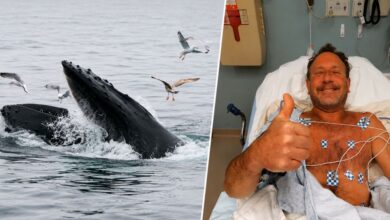
Hospice nurse shares which diseases bring the hardest and easiest final days
California end-of-life nurse Julie McFadden opens up about the illnesses that cause the most suffering—and those that allow peace.

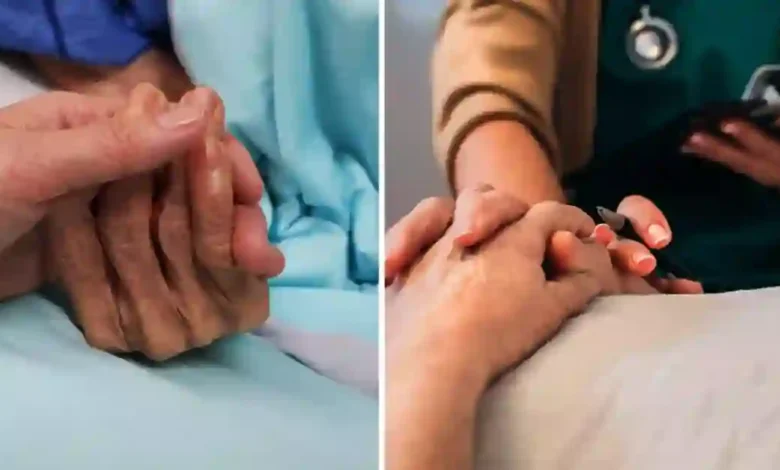
For California hospice nurse Julie McFadden, death is not an abstract concept but a daily reality. After years of guiding people through their final moments, she has developed a rare clarity about what the end of life can look like—and how it can differ from one disease to another.
McFadden, who has helped more than 100 patients through their final days, recently spoke about which illnesses she believes cause the most distress and which allow for a gentler goodbye. Her reflections have resonated widely online, shared by thousands who have witnessed loved ones endure similar struggles.
The hardest goodbyes
McFadden says one illness stands out for its cruelty: amyotrophic lateral sclerosis, or ALS. The condition, also known as Lou Gehrig’s disease, progressively destroys the body’s ability to control voluntary muscles.
“This is the cruelest death I’ve ever seen,” McFadden told Problem Solved. “People become trapped inside their own bodies.”
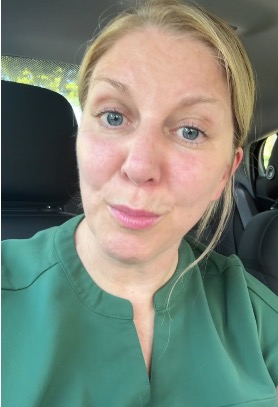
ALS leaves the mind intact while stripping away movement, speech, and, eventually, the ability to breathe. According to the Centers for Disease Control and Prevention (CDC), roughly 36,000 Americans are expected to be living with ALS by 2030. About half of all patients die within 14 months of diagnosis, and there is still no known cure.
Families often describe the experience as unbearable. “Watching someone you love fade like that, knowing they’re still in there—it’s devastating,” one commenter wrote on social media, reflecting on her father’s battle with the disease.
The rapid decline of glioblastoma
The second condition McFadden describes as especially painful to witness is glioblastoma, an aggressive brain cancer that strikes suddenly and progresses quickly.
“It takes everything—your memory, your motor skills, your personality—and it does it quickly,” she said.
According to the American Brain Tumor Association, the average survival time after a glioblastoma diagnosis is between 12 and 18 months. Only about 5% of patients live longer than five years. Families often describe a sense of loss that begins long before death, as loved ones slip away mentally even while still present.
“He was gone before he died,” one woman shared. “That’s what made it so hard.”
The calm of kidney failure
In contrast, McFadden says that end-stage kidney failure can offer one of the most peaceful natural deaths—particularly when dialysis is stopped as part of planned hospice care.
“When patients stop dialysis, they usually just get sleepy,” she explained. “And then they don’t wake up. It’s peaceful, it’s painless, and it allows families time to say goodbye.”
For many, that opportunity for a calm, intentional farewell is deeply meaningful. “We played music, held his hand, and he just slipped away,” one commenter said. “It was beautiful, in a way.”
Another shared, “My dad stopped dialysis when he was ready to go. We all got to say goodbye on his terms.”
McFadden’s openness has struck a chord with audiences who see her message as both honest and compassionate. Her stories, she says, are not about fear but about dignity—about how to support those nearing the end with clarity and care.
As conversations around end-of-life care grow more public, many experts agree that discussing death openly can reduce fear and help families prepare. The National Institute on Aging notes that hospice care can improve comfort, reduce unnecessary medical interventions, and offer emotional support for both patients and loved ones.
For McFadden, that transparency is vital. “Talking about death doesn’t make it happen sooner,” she’s said in previous interviews. “It just helps people feel less alone.”
While death is inevitable, McFadden’s experience reminds us that how we die—and how we care for each other in that process—matters deeply.
From the silent confinement of ALS to the swift unraveling of glioblastoma, and the quiet peace of kidney failure, her message is steady: even in the hardest moments, love and understanding can shape how we say goodbye.