Scientists warn of mega tsunami risk in three U.S. regions
Coastal communities in Northern California, Washington, Alaska, and Hawaii face a growing threat of devastating tsunamis triggered by earthquakes and volcanic activity, researchers say.

Scientists are alerting residents of Northern California, Washington, Alaska, and Hawaii about the looming danger of a catastrophic tsunami, potentially caused by seismic activity along the Cascadia subduction zone and volcanic instability.
Imagine waking to sirens and seeing a wall of ocean water surging toward your community. According to recent research, this nightmarish scenario is a genuine threat for three key U.S. regions, including the Pacific Northwest, Alaska, and Hawaii.
Scientists warn that a massive earthquake along the Cascadia subduction zone—a major fault line stretching from Northern California to British Columbia—could trigger a tsunami powerful enough to devastate entire coastal communities. Rising sea levels will only amplify the threat.
What is the Cascadia subduction zone?
The Cascadia subduction zone is a fault that runs approximately 700 miles from Northern Vancouver Island to Northern California. Scientists from Virginia Tech have found that a significant quake here could cause coastal land to sink by up to six and a half feet, dramatically enlarging flood zones and threatening communities.
Tina Dura, the study’s lead author and assistant professor at Virginia Tech, said this research is the first to quantify just how much coastal areas could flood after such an earthquake.
“The impacts to land use could significantly increase the timeline to recovery,” Dura warned.
Experts estimate a 15% chance that a magnitude 8.0 or greater earthquake could strike this region within the next 50 years, posing an enormous risk to coastal cities and towns.
How bad could it be?
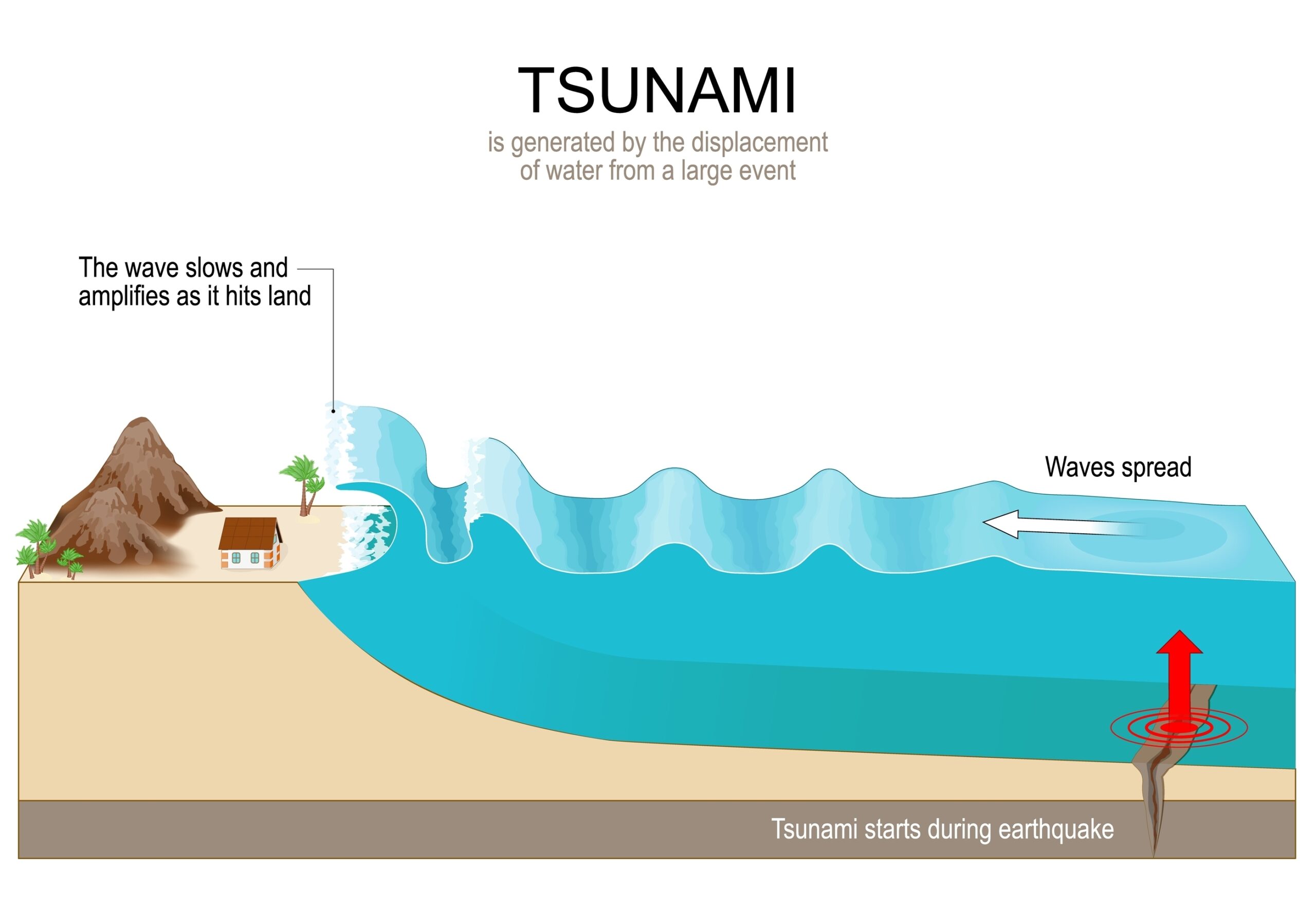
When massive seismic events occur, they can trigger waves that tower hundreds of feet, traveling inland with devastating speed and force. Unlike ordinary ocean waves, a mega tsunami can level entire communities in minutes.
In the Pacific Northwest, the danger isn’t limited to just initial earthquake damage. The subsequent land sinking and enormous waves pose additional and severe threats, particularly to communities situated in low-lying coastal estuaries.
“Cascadia is a unique place,” Dura said. “It’s not super heavily populated, but most estuaries have a community in them, and they’re all right in the zone of subsidence.”
Alaska and Hawaii are also at risk
Beyond the Cascadia region, Alaska and Hawaii face tsunami threats for different reasons.
In Alaska, melting glaciers have increasingly destabilized rocky terrain, raising the risk of massive landslides. Such events have the potential to displace huge amounts of water, generating enormous tsunami waves.
Hawaii’s vulnerability stems from its volcanic activity. Roughly 105,000 years ago, a landslide on the island of Lanai triggered a tsunami over 1,000 feet high. Even today, Hawaii remains vulnerable due to ongoing volcanic eruptions from Mauna Loa and Kilauea, both of which continue to reshape the landscape and pose serious threats.
These tsunami threats stem from the Pacific Ring of Fire—a volatile, seismic area encircling the Pacific Ocean, notorious for producing the planet’s most violent earthquakes and volcanic eruptions.
Historically, the last major quake on the Cascadia subduction zone happened on January 26, 1700, indicating the region is significantly overdue for another major event.
How to stay safe
While residents cannot prevent earthquakes or tsunamis, experts urge preparedness as the best defense. Knowing evacuation routes, staying updated on emergency alerts, and creating a family emergency plan can mean the difference between life and death.
Scientists emphasize that while they can’t predict exactly when the next earthquake or tsunami will happen, it’s essential to be ready now. For residents of these coastal regions, the next disaster isn’t a question of “if,” but “when.”