The heartbreaking story of Charla Nash — the woman who survived a chimpanzee attack
She helped a friend in need—but one terrifying moment changed her life forever


Charla Nash was just trying to help when a chimpanzee brutally attacked her, leaving her permanently disfigured and blind. What followed was a story of survival, resilience, and a fight for change.
On a cold February day in 2009, Charla Nash received a desperate call from her friend, Sandra Herold. Sandra’s pet chimpanzee, Travis, had escaped from her home in Stamford, Connecticut, and taken her car keys. Hoping to help, Charla quickly drove over.
But what happened next shocked the world.
When Charla tried to lure Travis back inside with one of his favorite toys—a red Elmo doll—the 200-pound chimp suddenly attacked. In a violent outburst, Travis tore off Charla’s hands, nose, lips, eyelids, and part of her jaw.
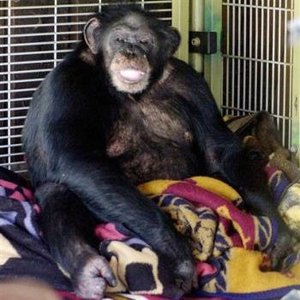
“He’s eating her!” Sandra screamed in a frantic 911 call as she tried to stop the rampage with a shovel and butcher knife.
By the time police arrived, Charla was unconscious and barely alive. Officers had to shoot Travis, who died from his injuries inside the house.
Travis wasn’t just a pet. He was raised like a human child after being taken from his mother at just three days old. Sandra and her husband treated him like family—he sat at the dinner table, drank wine, and even brushed his teeth.
Locals in Stamford knew him as the “celebrity chimp,” having appeared in commercials and performed tricks. But behind the charming surface, Travis was still a wild animal—one with immense strength. Experts say chimpanzees can be up to five times stronger than humans.
Though Charla had worked with Sandra before, she looked different that day—driving a new car and wearing a new hairstyle. That, combined with Travis possibly suffering from Lyme disease, may have triggered his unpredictable and violent behavior.
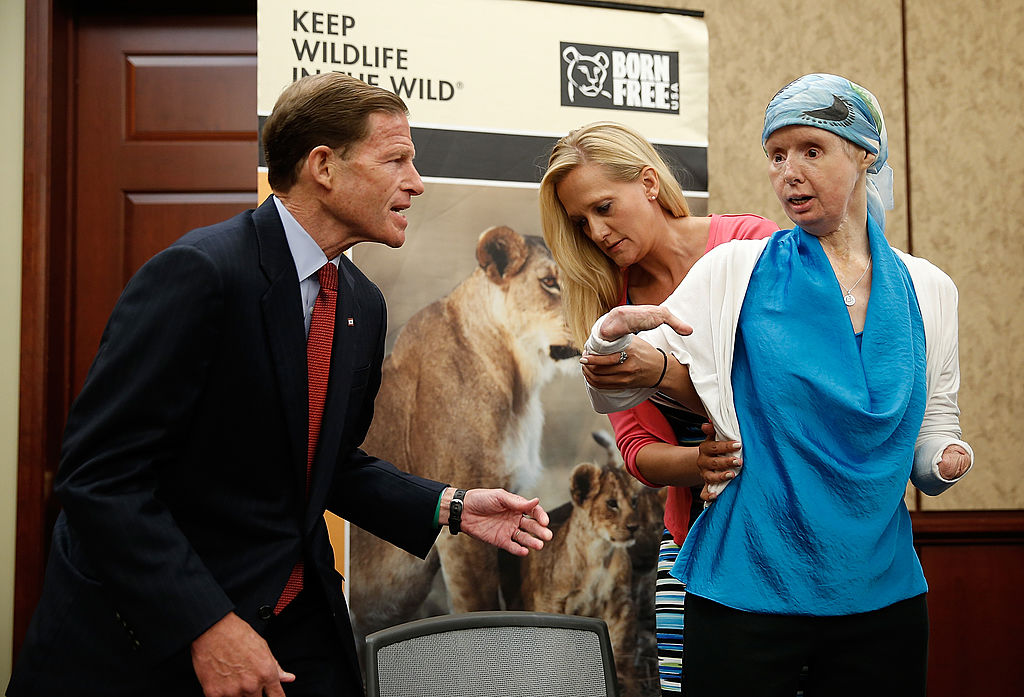
Charla was rushed to the hospital in critical condition. Surgeons worked for over seven hours to try and repair the unimaginable damage to her face and body.
“I’ve never seen anything this dramatic on a living patient,” said EMS Captain Bill Ackley.
She lost most of her facial features and the ability to see, as her eyes became infected. The trauma was so intense that hospital staff were offered grief counseling.
Despite the horror, Charla survived.
Charla’s courage captured national attention. In 2009, she appeared on The Oprah Winfrey Show, bravely revealing her face to the world for the first time.
“I don’t want to remember,” she said. “I want to get healthy. I don’t want to wake up with nightmares.”
Two years later, in 2011, she underwent a groundbreaking 20-hour full face transplant at Brigham and Women’s Hospital in Boston. The surgery gave her a new face—and a new chance at life.
“I’ve always known I’ve been strong,” Charla said. “If I couldn’t do something, I just took a breath and tried again.”
Charla didn’t hide from the world. Instead, she used her story to raise awareness about the dangers of exotic pets.
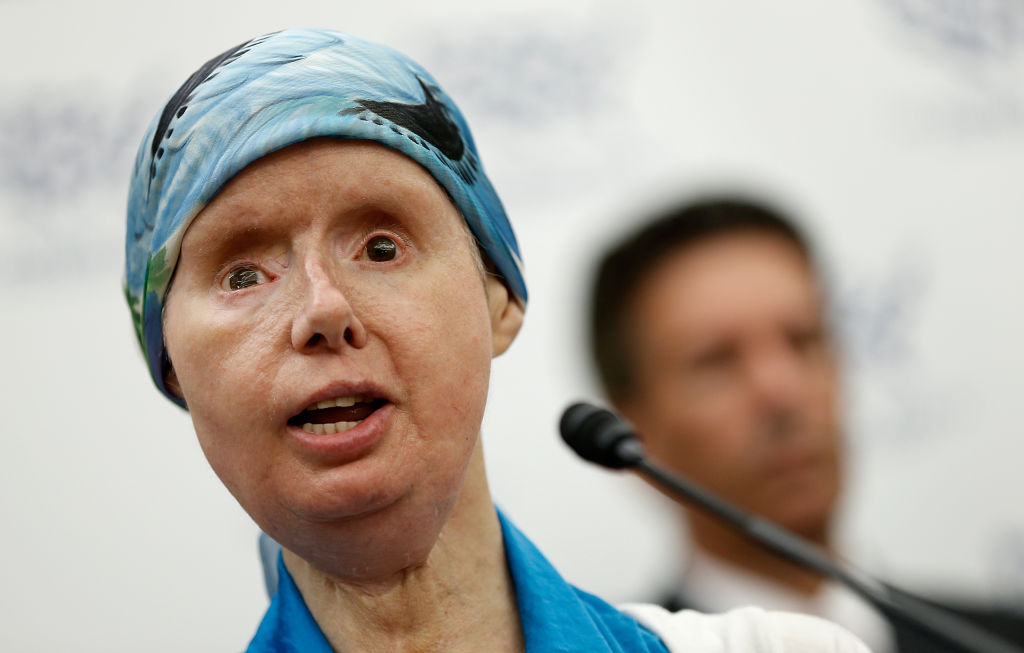
“These exotic animals are very dangerous and they shouldn’t be around,” she told Oprah.
She became an advocate, helping push for laws like the Captive Primate Safety Act, which aims to ban the sale of monkeys and apes across state lines. Though the bill faced delays, it was reintroduced in 2024—proof that Charla’s voice still matters.
Charla’s family sued Sandra Herold’s estate and reached a $4 million settlement. She also tried to sue the state of Connecticut for $150 million, claiming officials ignored past warnings about Travis’s behavior. Though the case was dismissed, it raised serious concerns about pet ownership laws.
Sandra Herold passed away in 2010 from a sudden aneurysm—just over a year after the attack. Her lawyer said her heart “could take no more” after losing her daughter, husband, beloved pet, and friend.
Officer Frank Chiafari, who shot Travis, suffered his own emotional trauma and later inspired legislation for mental health support for police officers involved in such distressing incidents.
Charla Nash’s journey is not just a story of tragedy—it’s a story of strength.
She survived the unthinkable, fought for justice, and turned her suffering into a mission to protect others. Her story helped change how people view exotic pets—and showed the world what true courage looks like.
Her words still echo today: “If I couldn’t do anything, I just took my time, took a breath, and tried again.”