The story of Marianne Bachmeier: the German mother who shot her daughter’s killer in court
How one act of vigilante justice in 1981 divided Germany and continues to raise questions about grief, justice, and revenge


In 1981, Marianne Bachmeier walked into a courtroom in Lübeck, Germany, pulled a pistol from her handbag, and shot dead the man who had murdered her 7-year-old daughter. Her decision to take justice into her own hands shocked the nation and sparked a debate that still lingers decades later.
On May 5, 1980, Marianne’s young daughter, Anna, skipped school after an argument and never came home. She had been abducted by Klaus Grabowski, a 35-year-old convicted sex offender with a history of abusing children.
Grabowski held Anna in his apartment for hours before strangling her. He later placed her body in a box and attempted to dispose of it near a canal. His fiancée alerted the police, leading to his arrest.

When investigators questioned him, Grabowski admitted to killing Anna but denied sexually abusing her. He went so far as to blame the child, claiming she had threatened to accuse him unless he gave her money. The court rejected his version of events, but for Anna’s mother, hearing those words was unbearable.
A mother’s breaking point
Marianne had endured a difficult childhood marked by trauma, abuse, and the loss of two children to adoption before Anna was born in 1973. Raising Anna as a single mother, she had built her life around her daughter.

During Grabowski’s trial in March 1981, Marianne reached a breaking point. On the third day of proceedings, she smuggled a pistol into the courtroom. Moments after entering, she pulled the weapon from her purse and fired seven shots at Grabowski, killing him instantly.
“He killed my daughter,” she reportedly said after dropping the gun. Witnesses recalled her calling him a “pig” as she stood over his body.
Trial and sentencing
Marianne was arrested on the spot and charged with murder. At trial, she initially claimed she had been in a dreamlike state when she opened fire. But forensic experts testified that her actions showed planning and preparation.

Ultimately, in 1983, she was convicted of manslaughter and unlawful possession of a firearm, receiving a six-year prison sentence. She served three years before being released.
Public opinion was deeply divided. Some believed her act was justified, while others argued that vigilante justice could never replace the rule of law. A national survey at the time revealed a nearly even split: some considered the sentence too harsh, others too lenient.
After serving her sentence, Marianne lived abroad for several years, marrying briefly in Nigeria before moving to Sicily. In the 1990s, she returned to Lübeck after being diagnosed with pancreatic cancer.
In interviews before her death, Marianne admitted she had carefully considered her actions. She said she wanted to stop Grabowski from spreading lies about her daughter during the trial.
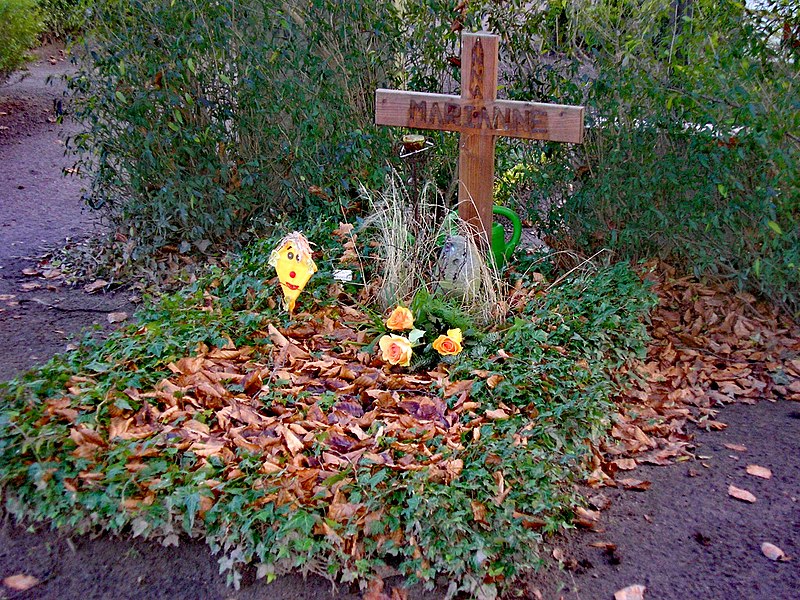
On September 17, 1996, at the age of 46, Marianne died in Lübeck. She was buried next to Anna.
Marianne Bachmeier’s story remains one of the most controversial cases of vigilante justice in modern Germany. For some, she represented a grieving mother who acted in desperation against a repeat offender. For others, her case raised difficult questions about justice, morality, and the dangers of taking the law into one’s own hands.
More than 40 years later, the courtroom shooting continues to be remembered as one of the most dramatic—and divisive—moments in German legal history.