Why Barron Trump is suddenly at the center of America’s Iran war backlash
Critics and commentators weigh in as social media calls for the president’s son to enlist, sparking a broader conversation about fairness, history, and public discourse

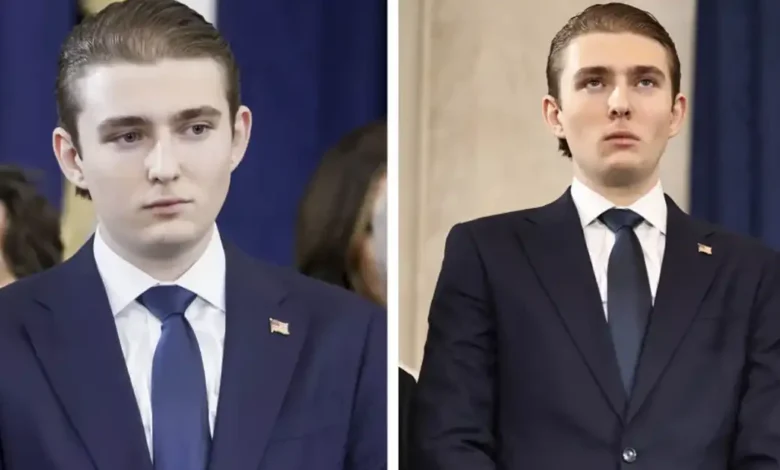
As tensions rise over U.S. involvement in Iran, a wave of online criticism aimed at Barron Trump has ignited debate not just about military service, but about how far political rhetoric should go—especially when it involves the children of public figures.
In recent weeks, social media platforms have been flooded with posts suggesting that Barron Trump, the youngest son of former President Donald Trump, should enlist in the military following renewed U.S. military activity in the Middle East. The backlash reflects frustration among some Americans who argue that political leaders and their families are often shielded from the consequences of war.
The online campaign gained further attention after television commentator Lawrence O’Donnell criticized the 20-year-old during a segment on his MSNBC program, questioning why Barron had not pursued military service. His remarks included comparisons to historical figures such as the children of President Franklin D. Roosevelt, who served during World War II, and Queen Elizabeth II, who joined the Auxiliary Territorial Service during the same conflict.
The comments quickly drew mixed reactions. While some viewers echoed the sentiment that public officials’ families should share in national sacrifice, others pushed back, arguing that targeting a young adult with no role in policymaking crosses an ethical line.
Experts say the situation highlights a recurring pattern in American political culture. According to analysis from the Pew Research Center, public trust in government decisions, particularly around military action, often influences how citizens view the personal responsibilities of leaders. When that trust erodes, scrutiny can extend beyond elected officials to their families.
Military service itself, however, is governed by strict eligibility standards. The U.S. operates an all-volunteer force, and while men are still required to register with the Selective Service System at age 18, a draft has not been implemented since 1973. Details from the Selective Service System confirm that even in the event of a draft, eligibility depends on multiple factors including health, physical requirements, and classification status.
Height, for example, can play a role in determining suitability for certain military positions, though it rarely disqualifies someone from service entirely. Guidelines from the U.S. Department of Defense indicate that physical standards vary by role, with flexibility depending on the needs of each branch.
Historians also caution against direct comparisons with past wartime eras. During World War II, national mobilization was widespread abarronnd compulsory, affecting millions of families across socioeconomic lines. Today’s military structure is fundamentally different, relying on voluntary enlistment and professional service members.
Beyond policy and precedent, the controversy has reignited discussion about the treatment of political families in public discourse. Media ethicists note that while criticism of leaders is a cornerstone of democratic society, extending that criticism to their children—particularly those not involved in governance—can blur important boundaries.
As the conflict abroad continues to evolve, the debate surrounding Barron Trump underscores a deeper tension at home: how Americans reconcile calls for accountability with the principles of fairness and personal responsibility.