An 80-Year-Old Alzheimer’s Patient Started Talking Again After a Single Dose of Psilocybin. Scientists Are Taking Note.

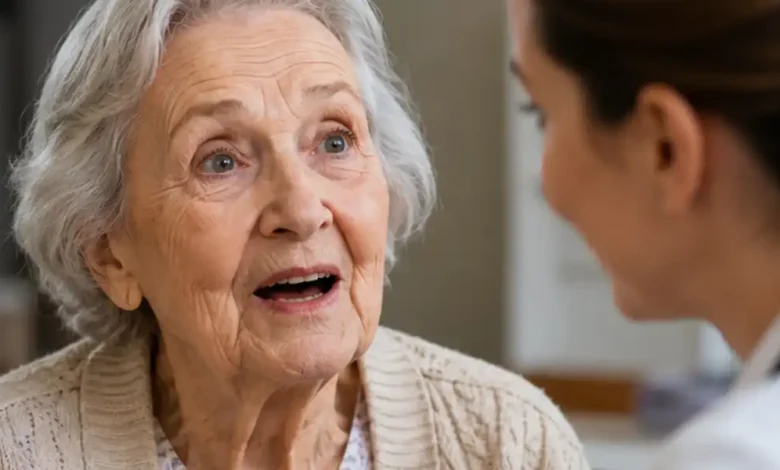
An 80-year-old woman who had not spoken in full sentences for five years began recalling detailed autobiographical memories hours after receiving a single high dose of psilocybin mushrooms, according to a case report published in May 2026 in Frontiers in Neuroscience. Researchers say the findings are not a cure — but they raise a serious question about what we think is permanently lost in late-stage Alzheimer’s disease.
The woman, a Japanese-American octogenarian with a 10-year history of Alzheimer’s, had been largely monosyllabic for five years by the time she entered the study. She was incontinent, unable to move without assistance, and showed minimal emotional responsiveness. Her caregivers had learned to communicate with her through single-syllable exchanges.
Then, approximately 19 hours after swallowing five grams of dried Enigma strain psilocybin mushrooms, she woke up and started talking.
What the Study Found
The case report, authored by Lago, Cerveira, and Simonet and published in Frontiers in Neuroscience (Lago, Cerveira and Simonet, 2026), describes what happened next in clinical language that is, by research standards, striking. The patient “spontaneously initiated autobiographical conversation lasting several hours,” the study notes.
The acute phase of the experience was not gentle. She became agitated, sweated heavily, and entered a prolonged deep sleep-like state, with clinically suspected hyperthermia. No brain imaging or polysomnographic monitoring was conducted during this phase, which the authors acknowledge as a limitation.
What followed was harder to explain. During a second session, she described “emotionally positive imagery involving surfing with her son on a peaceful island.” Researchers documented marked improvements in facial expressivity, emotional reciprocity, spontaneous humor, and gait agility.
Improvements That Lasted Weeks
The changes were not confined to the sessions themselves. In the days and weeks that followed, caregivers observed the restoration of urinary continence, improved mobility, autonomous dressing, and sustained social interaction. She began retrieving contextual memories and engaging in spontaneous conversation.
At the one-month mark, several improvements were still present: greater verbal expressivity, improved facial mimicry, spontaneous humor, and increased agility.
“It is pleasant to come here,” she told caregivers.
The researchers were careful not to overinterpret. The study involved a single patient. Causality cannot be established, and the authors noted that spontaneous fluctuations in neurodegenerative disease cannot be entirely ruled out. The patient’s Alzheimer’s continued to progress, and the improvements faded over time.
A Different Way of Thinking About Brain Decline
Alzheimer’s disease is generally understood as a process of irreversible brain damage — a progression of tissue loss that eventually strips away speech, memory, and function permanently. This case raises a different possibility: that some of what looks like permanent loss in late-stage Alzheimer’s may be a network problem rather than a tissue problem.
Dead neurons cannot be recovered. But disrupted neural networks, even in a damaged brain, might respond to the right kind of chemical signal, at least briefly.
Psilocybin is known to trigger rapid growth of dendritic spines, the tiny projections on neurons that form synaptic connections, particularly in the frontal cortex. Prior studies have also documented large-scale reorganization of brain networks following psilocybin administration, including increased global integration and cortical changes that may temporarily reconnect disrupted pathways.
Where the Research Stands
Psilocybin has attracted serious scientific attention well before this case. The FDA has designated it as a breakthrough therapy for treatment-resistant depression, a classification that accelerates the drug review process. A 2026 study published in JAMA Psychiatry confirmed significant clinical benefits for treatment-resistant depression in a randomized controlled trial.
For Alzheimer’s specifically, the clinical data is thin. Johns Hopkins University has an active clinical trial (NCT04123314) examining psilocybin as a treatment for depression in people with mild cognitive impairment or early Alzheimer’s disease. No trials are currently testing it in advanced dementia patients, which is precisely why this case report has drawn attention.
For African families, the story lands in a specific context. In 2015, approximately 2.13 million people in sub-Saharan Africa were estimated to be living with dementia, a figure projected to reach 7.62 million by 2050. Eastern sub-Saharan Africa is expected to see a 357% increase in dementia cases between 2019 and 2050, the largest regional increase projected anywhere in the world, according to a Lancet Public Health study.
Dementia care across much of the continent is carried largely by families, typically with minimal medical support, limited diagnostic resources, and deep stigma around cognitive decline. For many caregivers, watching that shift — from person to presence to absence — happens privately, without language for what they are experiencing.
A single case report from a Brazilian research institution is a long way from a treatment available in a clinic in Nairobi or Lagos. But the question the study asks — whether something of the person persists, even at the late stage, locked behind damaged neural architecture rather than erased — is not a purely scientific one.
What Comes Next
The researchers have called for formal clinical trials to investigate psilocybin’s effects in advanced Alzheimer’s, including larger patient samples, controlled conditions, brain imaging, and standardized cognitive assessments. Without those, this remains a single data point: striking, but not yet replicable evidence.
Scientists are already investigating psilocybin for early Alzheimer’s and memory-related depression. What they are not yet investigating, at any scale, is what this case suggests: that the most advanced patients — the ones their families have largely mourned — might be a more complicated story than medicine has assumed.
“It is pleasant to come here,” she said.
For five years, nobody had heard her say anything like that.