“I Came Back From the Dead”: A Bride’s First Words Since Her Japan Health Crisis

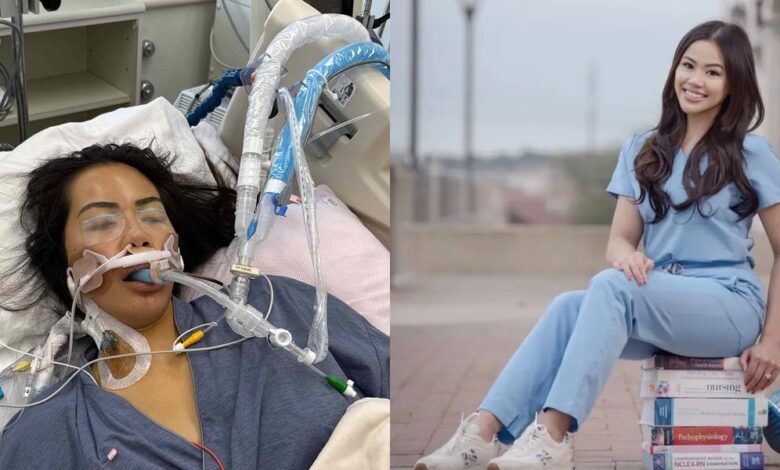
Sarah Danh has no memory of the worst night of her life. Three months after she was airlifted out of Japan in a coma, the 27-year-old Texas nurse is speaking publicly for the first time about a medical crisis so severe that doctors warned her family she might never wake up.
Danh and her husband, Luke Gradl, married on March 21 in Spring Branch, Texas. Weeks later, they flew to Tokyo for their honeymoon. It was supposed to be the celebration of a wedding Danh had spent more than a year planning.
Instead, on their second day in Japan, everything changed.
A Trip That Turned Into a Medical Emergency
Sarah Danh developed jaundice, vomiting, fever, and severe body aches almost immediately after arriving. According to PEOPLE’s original reporting on the crisis, her condition worsened quickly. She began showing signs of hepatic encephalopathy, a dangerous decline in brain function that happens when a failing liver can no longer clear toxins from the blood.
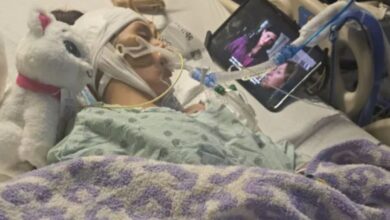
She was rushed to a hospital and slipped into a coma. Doctors found both her liver and kidneys were failing. She also developed swelling inside her skull and, family members later revealed, suffered a stroke that caused severe brain damage on both sides.
For nearly two weeks, Danh remained in a Tokyo intensive care unit. She underwent continuous renal replacement therapy, dialysis, blood transfusions, and plasma exchanges as doctors worked to keep her alive far from home.
Bringing Her Home
A family friend started a GoFundMe with a goal of $50,000 to help cover the costs. Japanese hospitals require payment before treatment continues, and the bills were mounting fast.
Donations poured in from strangers following the story online. The fund was eventually paused after contributions topped $187,000, nearly four times the original goal.
On April 21, still unconscious, Danh was flown back to Texas on a medical evacuation flight arranged through her employer, Methodist Hospital Stone Oak, and HCA Healthcare. She came off life support days later. By April 29, she was awake.
Speaking for Herself
Three months after that first symptom in Tokyo, Danh posted on Instagram. It was her first public account of what happened, written in her own words.
“First things first… I’m alive,” she wrote. “It feels bittersweet to finally be sitting here, able to tell this story myself.”
She thanked the people who had followed her case and the strangers who gave money to a fundraiser for someone they had never met. “I will never be able to fully express how grateful I am for the love that surrounded me while I couldn’t speak for myself,” she wrote.
Danh also revealed something her family hadn’t mentioned before: she hadn’t felt entirely well in the days leading up to the trip. She suspected COVID-19, tested negative, and was told to rest, stay hydrated, and alternate Tylenol and Ibuprofen. No bloodwork was done.
She remembers none of what came after. Not the flight where she grew too weak to walk through customs. Not the night her husband says she became confused and disoriented, and her skin turned yellow. Not the ambulance ride to the hospital where doctors diagnosed acute liver failure.
“I have absolutely no memory of any of it,” she wrote.
What Came After
Back in Texas, doctors told her the brain injury tied to her liver failure was unlike most others: it had a chance of reversing. Slowly, it did.
“Then something incredible happened,” Danh wrote. “My liver slowly began healing itself. The swelling in my brain started going down.”
She is still working through what the experience changed in her. “It taught me how unbelievably fragile life is,” she wrote. “It taught me to love louder, forgive quicker, and appreciate the ordinary moments we so often take for granted.”