Israel’s Oldest Holocaust Survivor Dies at 107 After Spending Decades Preserving Jewish Memory

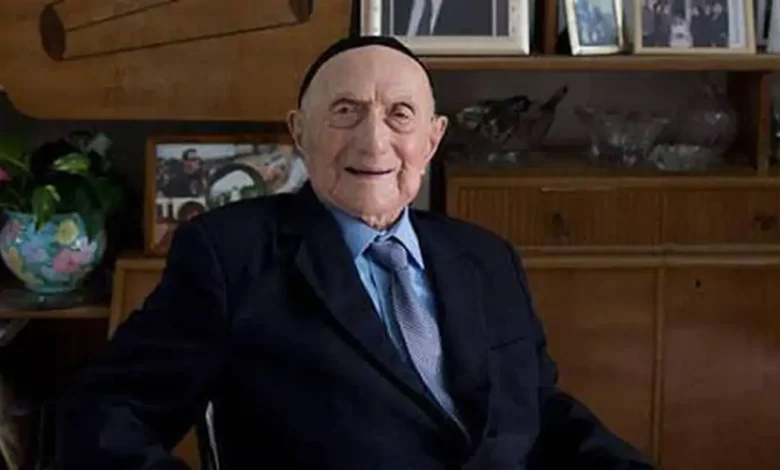
For Yehuda Aharon Widawski, surviving the Holocaust was only the beginning. He lived through the Łódź Ghetto, Auschwitz-Birkenau and Nazi forced labor, losing much of his family along the way. After the war, he built a new life in Israel, but decades later he returned to Poland to search for his grandmother’s grave.
That personal search became a lifelong mission to find, restore and preserve Jewish graves and cemeteries left behind after the destruction of Poland’s Jewish communities.
Widawski, Israel’s oldest living Holocaust survivor, has died at the age of 107. His death was reported by Israeli media and Holocaust remembrance organizations in September 2026.
From the Łódź Ghetto to Auschwitz
Widawski was born in 1919 in Turek, Poland, and later moved with his family to Łódź.
When the Nazis established the Łódź Ghetto, the family was forced inside. They continued working in textiles under increasingly brutal conditions until the ghetto was liquidated.
On August 29, 1944, Widawski and members of his family were deported to Auschwitz-Birkenau. His parents, Abraham and Leah, and his older brother Gabriel were murdered there.
With great sadness, we received information about the passing of Auschwitz Survivor Yehuda Widawski.
He was born on 26 July 1919 in Turek, near Łódź, in central Poland. In 1933, the family moved to Łódź, where he became active in the Hashmonaim youth movement and later helped… pic.twitter.com/Q16mbQt7rz
— Auschwitz Memorial (@AuschwitzMuseum) September 14, 2026
Ad
Widawski and his younger brother Jehoszua survived the selection and were later transferred to the Friedland forced-labor camp, where prisoners were forced to manufacture aircraft components. The brothers survived until the camp was liberated by the Red Army in May 1945.
Widawski returned to Łódź after the war and began rebuilding a life that had been almost completely shattered.
A search for one grave became a life’s work
In 1950, Widawski immigrated to Israel, where he built businesses and raised a family.
Nearly three decades later, he returned to Poland.
He was looking for his grandmother’s grave. But when he saw the condition of Jewish cemeteries and the traces of communities that had been destroyed, his personal search took on a much larger meaning.
As The Times of Israel reported, Widawski decided to locate, identify and restore Jewish graves across Poland.
President Isaac Herzog later described that search as the beginning of a lifelong mission. Over the decades, Widawski helped identify more than 3,000 graves and worked to restore Jewish cemeteries and preserve the memory of communities that had been devastated during the Holocaust.
What began with one family grave became a decades-long effort to make sure thousands of other people were not forgotten.
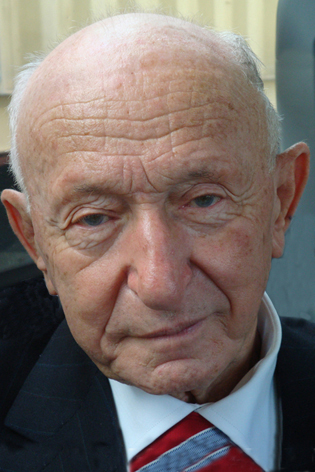
His work was recognized in Israel
Widawski’s dedication to preserving Jewish history eventually earned national recognition.
In 2012, he was chosen to light one of the memorial torches at Israel’s official Holocaust Remembrance Day ceremony at Yad Vashem. He also continued taking part in remembrance events connected to the Jewish community of Łódź.
His story was not simply about what happened to him during the Holocaust. It was also about what he chose to do with the decades that followed.
He returned repeatedly to Poland, searched for graves and helped restore places where Jewish life had once flourished.
“My revenge on the Nazis is that they lost”
Widawski once described his answer to the Nazis in remarkably simple terms.
“My revenge on the Nazis is that they lost, and we have the State of Israel. We are free and strong, and no one will ever be able to destroy us again.”
The quote was recalled in reports following his death and reflected the way Widawski viewed his life after the Holocaust: not only as a story of survival, but as a continuation of the Jewish life the Nazis had tried to destroy.
In 2018, Widawski returned to Poland with members of his family to retrace important places from his past. The following year, he celebrated his 100th birthday surrounded by family and friends.
He lived to see five generations of descendants.
Remembered by Israel’s president
Following Widawski’s death, Israeli President Isaac Herzog paid tribute to him.
Herzog recalled hosting Widawski at the President’s Residence when the Holocaust survivor was 104. He said he was moved by Widawski’s life story and by his decision to return to Poland to search for his grandmother’s grave.
“That search became a life’s work,” Herzog said, describing Widawski’s decades of work locating and restoring Jewish cemeteries and graves and helping identify more than 3,000 graves.
Herzog described Widawski’s life as a testament to “the victory of life, memory, and revival.”
What remains when the survivors are gone
The death of a Holocaust survivor carries a particular weight.
For decades, survivors were living witnesses to a history that can sometimes feel impossibly distant. They remembered relatives, homes and communities that disappeared. They could put names and faces to places that otherwise risked becoming little more than entries in history books.
Widawski understood that remembrance could not depend forever on survivors being alive to tell their stories.
So he spent much of his later life making sure the dead could still be found.
He searched for graves. He helped restore cemeteries. He preserved pieces of Jewish history that had been neglected or damaged after the destruction of Europe’s Jewish communities.
Yehuda Aharon Widawski is now gone at 107. But the work he left behind carries a message that is difficult to forget: survival is not only about living through history. Sometimes, it is about making sure the people who did not survive are remembered long after you are gone.