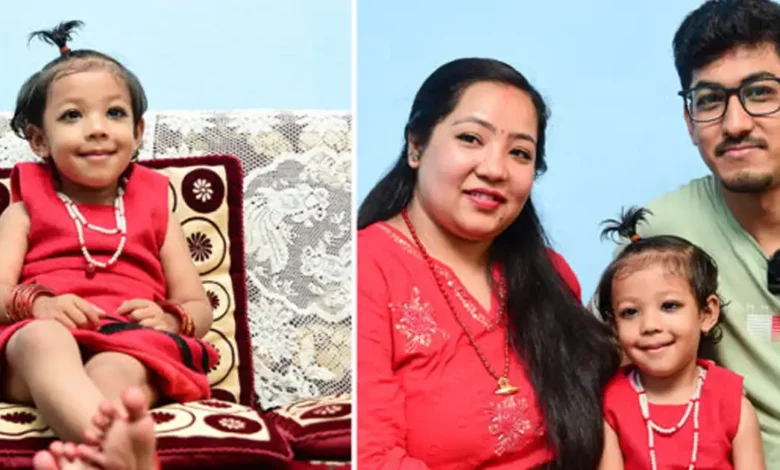
Nepal appoints 2-year-old Aryatara Shakya as new ‘Living Goddess’ Kumari
The centuries-old tradition sees young girls worshipped as divine figures by both Hindus and Buddhists in Kathmandu Valley

A two-year-old girl in Nepal, Aryatara Shakya, has been chosen as the nation’s new “Living Goddess,” taking over the role of Kumari after her predecessor stepped down upon reaching puberty.
Aryatara, aged two years and eight months, was officially appointed on September 30 during Dashain, Nepal’s most significant Hindu festival. She now resides in the Kumari Ghar palace temple in Kathmandu, where she will remain until she reaches puberty.
The Kumari tradition dates back to the 17th century and is central to Nepal’s Newari culture. The chosen girl is believed to embody the Hindu goddess Taleju, and she is revered by both Hindus and Buddhists.
Aryatara succeeds 11-year-old Trishna Shakya, who served as the Royal Kumari until she neared her first menstruation — the stage at which a Kumari’s divine role comes to an end.
Two-year-old Aryatara Shakya, the newly selected Living Goddess Kumari, is carried by family members to the Kumari Residence at Basantapur Darbar Square on Tuesday. She succeeds outgoing Kumari Trishna Shakya, continuing the centuries-old Newar tradition.
Photos: SUMAN NEPALI pic.twitter.com/sUnwgJyxwg
— Nepali Times (@NepaliTimes) September 30, 2025
The selection of a goddess
Girls chosen for the role are typically between two and four years old. They must meet strict criteria, including flawless skin, eyes, hair, and teeth. They are also expected not to fear the dark and must wear red.
During festivals, the young goddess will appear in ceremonial dress with her hair pinned up and a symbolic “third eye” painted on her forehead. Despite her sacred status, a Kumari lives mostly in seclusion, leaving the palace only on specific occasions to bless devotees, dignitaries, and even Nepal’s president.
“My wife dreamed she was a goddess during pregnancy, and we knew our daughter was destined for something special,” Aryatara’s father said.
Life inside the palace
Historically, the Kumari’s role has been marked by isolation, but recent reforms have aimed to modernize the tradition. According to reports, today’s Kumaris are allowed access to television, homeschooling from private tutors, and receive a monthly pension of around $110.

Local folklore, however, still carries a warning: men are said to face misfortune if they marry a former Kumari after she leaves her divine role.
For Aryatara’s family, her appointment is both a spiritual and personal milestone. “She was just my daughter yesterday, but today she is a goddess,” her father said.
As the new Kumari, Aryatara will continue a tradition that blends faith, ritual, and cultural identity, embodying the sacred role of a goddess in the heart of Kathmandu until the day she returns to ordinary life.