Your Fan Might Be Wrecking Your Sleep — Here’s What Doctors Say
Your Fan Might Be Wrecking Your Sleep — Here's What Doctors Say

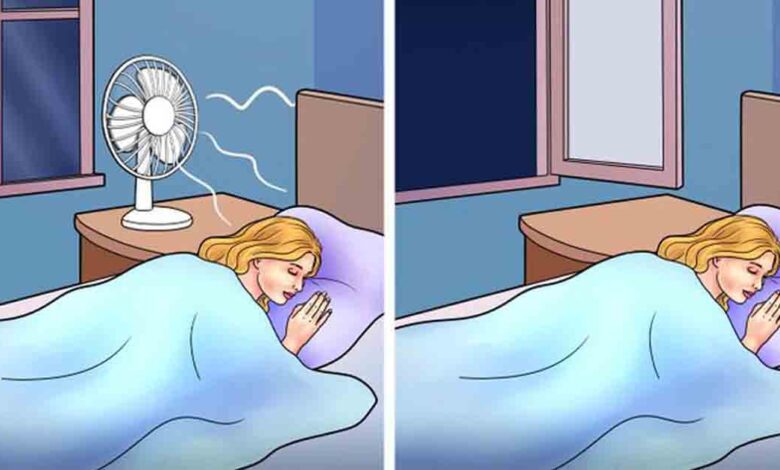
That fan pointed at your face all summer isn’t dangerous. It’s also not doing you many favors. Sleep researchers say fans dry out your nose, throat and eyes, kick up dust and pollen, and can leave you waking up sore. A genuinely cool room, fan or not, comes with real benefits. A fan alone isn’t quite the same thing.
A fan won’t give you a cold. But if you have allergies or asthma, one circulating dust can trigger coughing or congestion. That’s less about the fan and more about what’s been sitting on the blades for months, according to GoodRx’s rundown on fan-related sleep side effects.
Dryness is the real issue. Hours of moving air pull moisture from your skin, eyes, nose and throat. Sleep with your mouth open and you’ll feel it by morning as a scratchy throat. Dried-out sinuses sometimes overproduce mucus to compensate, which is where the stuffy, headachy feeling comes from.
Muscle stiffness is real too. It’s about proximity, not the fan being inherently bad. Air blowing on one spot all night, unmoving, leaves it tight. An oscillating fan a few feet away fixes most of this.
None of it means ditch the fan. For infants under one, fan use has actually been linked to a lower SIDS risk. This is a tradeoffs conversation, not a verdict.
Where the science holds up, and where it doesn’t
The strongest claim here has real research behind it, with a catch. A small 2014 NIH-funded study, covered by Virginia Commonwealth University’s news office and published in the journal Diabetes, had five men sleep in temperature-controlled rooms for four months. At 66°F, their brown fat (the metabolically active kind that burns calories to generate heat) nearly doubled. Their insulin sensitivity improved. Warm the room back up and the effect reversed.
That’s genuine. It’s also five people. The study’s own author called it a proof of concept, not a reason to crank the AC for weight loss.
The melatonin and anti-aging claim is softer ground. Cooler temperatures do help trigger the body’s natural melatonin release before sleep. That part checks out. The idea that this measurably slows aging is a bigger leap than most of the wellness blogs making the claim let on.
What actually helps
- A bedroom around 60-67°F is the range most sleep researchers agree on.
- Cotton bedding over synthetic helps regulate temperature without any extra gear.
- A programmable thermostat gets you consistency a fan alone can’t.
- If allergies are the issue, cleaning the fan blades matters more than whether you use one.
Keeping a room cool is one of the better-supported, low-effort sleep habits going. The fan just isn’t doing what people think it’s doing. It just moves air around. It doesn’t cool the room.