Woman Gives Birth to Four Identical Girls in One-in-15-Million Pregnancy
Woman Gives Birth to Four Identical Girls
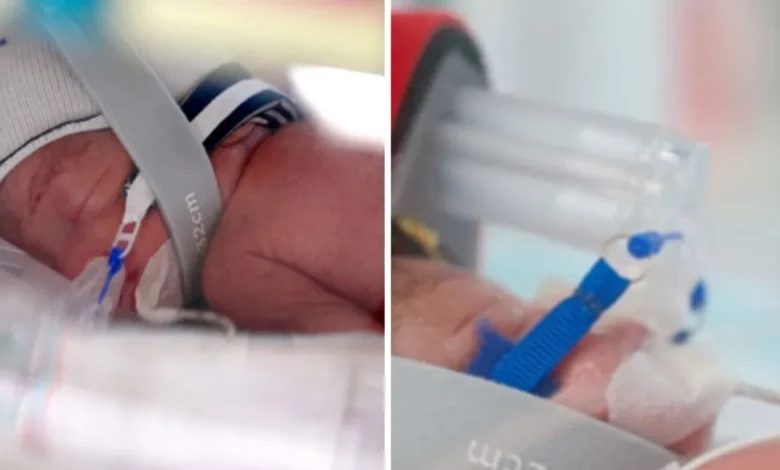
An Australian woman has welcomed four identical baby girls in an extraordinarily rare pregnancy that doctors estimate occurs in approximately one in every 15 million pregnancies.
The 34-year-old mother, Jenitar Sau Na’amoana, and her husband, Jortham, were left stunned after naturally conceiving quadruplets despite not having planned to expand their family.
The four girls, named Emily, Harriet, Alexa, and Catherine, were delivered via Caesarean section at Royal Brisbane and Women’s Hospital (RBWH) on July 14, 2026.
According to the hospital, the babies were born at 28 weeks and four days after an extremely high-risk pregnancy that required close monitoring by a specialist medical team.
Four Identical Girls Conceived From One Fertilised Egg
The hospital described the birth as an unprecedented occurrence, explaining that the quadruplets were spontaneously conceived and developed from a single fertilised egg that split into four embryos.
Even more remarkably, all four girls shared one placenta, making the pregnancy exceptionally rare.
RBWH Maternal Fetal Medicine Specialist and Obstetrician Dr Alexa Bendall, who cared for Jenitar throughout her pregnancy, said doctors had never encountered a spontaneously conceived pregnancy of this type involving quadruplets.
“Monozygotic quadruplets are estimated at one in every 15 million pregnancies, but to share the same placenta, this is unheard of,” Bendall said.
She praised Jenitar for handling the unexpected news and the challenges of carrying four babies.
“Jenitar has taken everything in her stride from day one – we have never seen a spontaneously conceived pregnancy of this type with quads, and she has somehow dodged every complication and risk for both herself and her babies to be here today, with four gorgeous newborn girls,” she said.
Mother of Eight Welcomes Four More Children
Jenitar and her husband already had four children, aged between one and 10, when they discovered they were expecting quadruplets.
The unexpected pregnancy meant the couple would suddenly be preparing to raise eight children, including four newborns requiring specialised care.
The mother had been under the care of an extensive team of medical experts at RBWH since she was 10 weeks pregnant.
Due to the significant risks associated with the pregnancy, she was admitted to the hospital at 25 weeks to allow doctors to monitor her and the babies closely.
Bendall said the medical team had hoped to get Jenitar to at least 28 weeks, making the successful delivery at 28 weeks and four days an extraordinary achievement.
“We always said that if we could get her to 28 weeks, we would be doing well, so we are happy she could make it to this gestation,” she said.
Quadruplets Remain in Hospital’s Intensive Care Unit
Following their delivery, Emily, Harriet, Alexa and Catherine were admitted to RBWH’s specialist Neonatal Intensive Care Unit (NICU), where they will continue receiving care as they grow stronger.
The hospital said the four girls were doing extremely well and would remain under specialist supervision until they were ready to leave.
One of the babies, Alexa, was named after Dr Bendall in a touching tribute to the specialist who supported their mother throughout the extraordinary pregnancy.
Meanwhile, Jenitar and Jortham are preparing for the challenges of raising their growing family.
The mother has launched an online fundraising campaign to help the family purchase a van with at least 10 seats to accommodate their eight children.
In a message accompanying the fundraiser, which had attracted more than A$37,000 in donations, Jenitar expressed gratitude for the safe arrival of her daughters while acknowledging the challenges ahead.
“Our four precious miracles have arrived safely, and while our hearts are overflowing with gratitude, the reality of caring for four newborns at once has brought challenges we never could have imagined,” she wrote.
The birth has drawn attention to the extraordinary rarity of naturally conceived identical quadruplets, particularly those sharing a single placenta.



There are no comments yet. Why don't you write one?