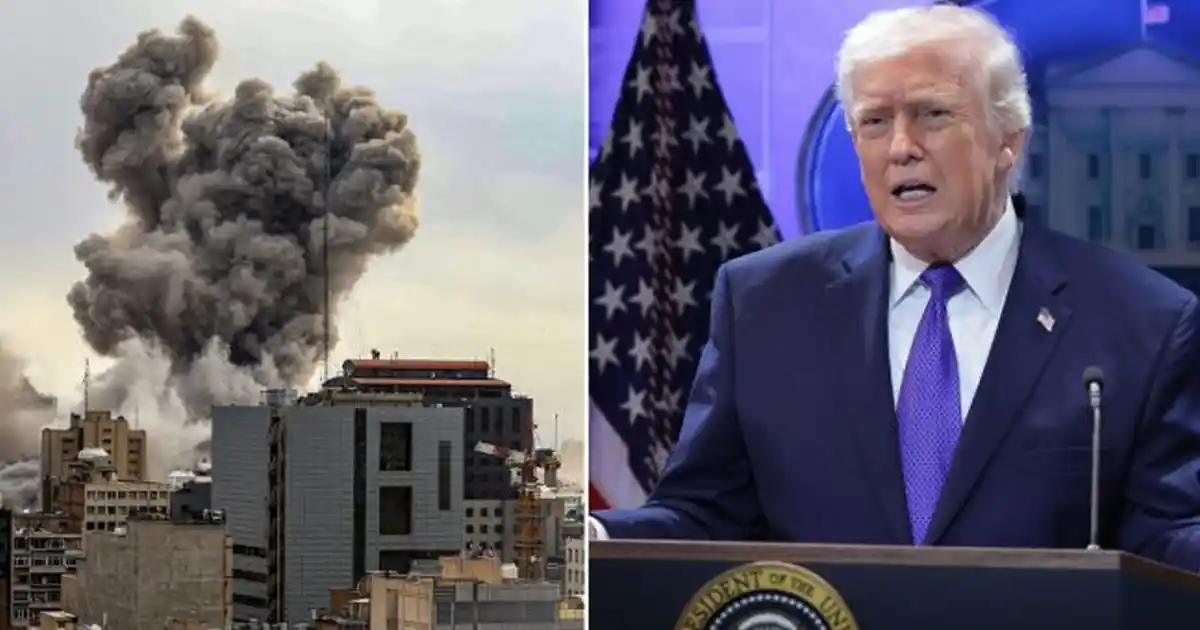
U.S. urges Americans to leave 15 countries as tensions escalate
The State Department has issued an urgent travel advisory covering parts of the Middle East as fears of a wider regional conflict grow.

The U.S. government is urging American citizens to leave several countries in the Middle East immediately, warning that rising tensions with Iran could quickly escalate into armed conflict across the region.
The warning, issued by the U.S. Department of State, comes after a sharp increase in hostilities between the United States and Iran. Officials say the advisory is meant to protect American citizens who may currently live, work, or travel in areas where security conditions could deteriorate rapidly.
According to the State Department’s travel advisory system, the alerts are designed to inform U.S. citizens about potential dangers abroad and recommend safety precautions. The department advises Americans in affected areas to leave using available commercial transportation while it remains operational.
The advisory currently applies to 15 locations across the Middle East: Bahrain, Egypt, Iran, Iraq, Israel, the West Bank and Gaza, Jordan, Kuwait, Lebanon, Oman, Qatar, Saudi Arabia, Syria, the United Arab Emirates, and Yemen.
The situation intensified after the State Department ordered non-emergency U.S. government employees and their family members to depart the United Arab Emirates due to concerns about possible armed conflict.
“Our number one priority is the safety and security of American citizens everywhere in the world,” U.S. Secretary of State Marco Rubio said in remarks shared online.
The advisory comes amid a rapidly evolving geopolitical situation involving Washington and Tehran. Relations between the two countries have remained strained for years, particularly since the United States withdrew from the Iran nuclear agreement in 2018, a deal that had previously placed limits on Iran’s nuclear program in exchange for sanctions relief.
Regional tensions often ripple across neighboring countries because of military alliances, strategic shipping routes, and the presence of U.S. military bases throughout the Gulf. The U.S. maintains thousands of troops in the region, particularly in countries such as Qatar, Bahrain, and Kuwait, according to reporting by the Council on Foreign Relations.
President Donald Trump suggested the conflict could continue for weeks or even longer, though he indicated U.S. forces had already achieved some early objectives.
Speaking during a Medal of Honor ceremony at the White House honoring service members killed in Iranian retaliatory strikes, Trump said the situation had progressed faster than expected.
“We’re already substantially ahead of our time projections,” he said. “But whatever the time is, it’s OK.”
The president added that the United States had initially projected a timeline of four to five weeks for operations but maintained the capability to continue longer if necessary.
Security analysts say the coming weeks will likely determine whether the confrontation remains contained or spreads further across the region. For now, U.S. officials continue urging citizens in affected areas to monitor official alerts and leave while travel options remain available.